
Care in the Machine No. 10: What I've Changed My Mind On
Oct 05, 2026Care in the Machine is Dr. Michael Jones's weekly note on counseling, ethics, and the technology showing up in our work. It arrives by email every Monday. Subscribe here, or browse past issues.
Care in the Machine
A weekly note on counseling, ethics, and the technology showing up in our work.
Issue No. 10 (Special) · Friday, October 2, 2026
I started this newsletter ten weeks ago for a simple reason. I wanted a place to get my own thoughts out loud, and I wanted a reason to keep up with what the literature on artificial intelligence was actually saying, instead of catching it secondhand. Ten issues in, both of those things are still true. What has changed is what I'm hearing back.
This week I sat with all nine issues at once and really read through where I started and where I've landed, because issue ten felt like the right place to say some of that out loud rather than let it sit quietly behind the scenes. Some of what I wrote in August I would write differently today. Not because it was wrong exactly. More because I didn't yet know what I was going to keep running into, issue after issue, reader after reader. So instead of the usual four teaching ideas this week, I want to tell you what's actually moved.
What I've changed my mind on
I expected a middle ground. I'm still looking for one. When I started, I figured most of what I'd hear from readers would cluster somewhere reasonable, cautious, curious, willing to learn. What I've actually heard sorts into two piles. One pile is afraid of this technology outright. The other wants to adopt it as fast as the market will let them. Both piles are loud. What I keep looking for and keep not finding enough of is the quieter group, the people willing to slow down long enough to watch what this is actually doing to the people and systems around them before they decide what to do with it. That group is smaller than I expected it would be by now.
The fear has moved, and it hasn't changed anything yet. Two months ago, the fear I heard most about was coming from clinicians and clients. Now some of the loudest fear is coming from the companies building these tools. That's new, and in August I wouldn't have predicted it. The people who built this without many guardrails are now the ones saying out loud that they went too far. I take that seriously. What I don't yet see is the follow-through. We are naming the problem loudly in public, and still using the same products at the same pace in private. Being asked to slow down and actually slowing down are two different things, and right now we're doing a lot more of the first one.
My students taught me something I didn't want to learn. I am watching students reach for AI on tasks they are fully capable of doing themselves, an APA-formatted page, a cover page, the basic mechanics of the work. Not because the task is hard. Because they don't trust themselves not to get it wrong, and the tool removes that risk before the skill ever gets built. I expected adoption to outpace policy. I didn't expect it to outpace confidence.
The group paying closest attention to the real cost isn't the group I expected. Here's where I land hopeful instead of worried. The people I'm hearing talk most seriously about AI's actual cost, the environmental weight of the data centers behind it, who gets harmed and who profits, aren't industry leaders or policymakers. They're younger than that, eighteen to twenty-five, and a good number of them aren't arguing to get rid of the technology entirely. They're arguing that decisions about it should run through public conscience before they run through dollars and cents. I don't think walking away from AI is realistic, and I don't think that's what most of them are asking for either. I think they're asking the industry to weigh something it's currently skipping. I'd like to see our field start listening to that generation on policy, not just managing them in the classroom.
What this means from each chair. For the therapist, it means asking where you've landed in that middle ground yourself, and being honest if you haven't found it yet. For the supervisor, it means noticing when a supervisee reaches for a tool to avoid a mistake rather than to extend their judgment, and naming that gap directly. For the counselor educator, it means building assignments that make the thinking visible again, not just the finished page. For the counselor in training, it means trusting that the slow way of learning a skill is not a weakness. It is the thing that will still be yours when the tool isn't in the room.
This week's free resource: Care in the Machine: The First Ten Field Guide
Ten issues in, I wanted to put everything useful in one place. This week's free resource is every one-page tool this newsletter has built so far, Asking About AI, Six Questions Before You Trust an AI Tool, The First Listener, Naming the Machine, Three Questions to Open the AI Conversation, A Pacing Checklist, Five Questions for Any Tool That Enters the Room, and Reading the Fine Print, bound into a single field guide with a short note from me and an index telling you when to reach for which one. I also fixed something while I was in there. The Six Questions guide from Issue No. 3 has been missing its sixth question and its footer since the week it went live, a production error on my end that sat uncaught for weeks. It's rebuilt here.
Download it here (no form, no gate)
Subscribers get the resource free every week. That is the deal: you signed up, you get the tools.
From my desk
Last Monday morning, about an hour before Issue No. 9 was set to send, I went looking for that week's free resource, a PDF I knew I'd already built and had in hand days earlier. It wasn't anywhere. Not my downloads, not my desktop, not Drive, not Dropbox. A file I was sure existed simply didn't, not where I expected it and not anywhere I checked.
Here's where I kept my hands on the wheel. I didn't send the issue without the resource, and I didn't let the deadline talk me into shipping something different from what I'd already told readers they'd get. I rebuilt the one-pager from the same spec I'd approved the first time, checked it against my own notes line by line before it went anywhere near the site, and only then uploaded it and sent the issue.
Try this: whatever tool hands you a finished file, a download, an export, an attachment, don't trust that the handoff is the same as storage. The moment you build something you'll need again, save a second copy somewhere you control, a folder, a drive, before you need it, not after you've gone looking for it and found nothing.
This week in the field
California answered one of this newsletter's longest-running questions this week, and the answer was no. Governor Newsom vetoed SB 903 on September 30, the bill that would have barred companies from marketing AI chatbots as therapy and from letting automated systems pass as licensed mental health professionals. This newsletter has tracked this bill since Issue No. 6. It is worth sitting with what the veto actually means. The narrowest, most direct attempt yet to protect our professional identity in law did not survive the governor's desk, and the gap it would have closed stays open. So what for us: the law isn't going to draw this line for us anytime soon. We draw it ourselves, in how we talk with clients about what a chatbot is and isn't, until something like SB 903 comes back around.
A new paper making the rounds this week argues for something I've been circling in my own head for ten issues now, that conversational AI should be treated as a tool, not a companion (Novelli et al., 2026). The authors name a mechanism worth sitting with directly: these systems are built through alignment procedures that reward warm, agreeable responses, and that warmth can tip into overvalidation, reinforcing a person's distorted beliefs rather than gently testing them, especially for someone already struggling. The interaction only runs one way. The user discloses. The system responds. Nothing on the other side risks anything. So what for us: that asymmetry is a clean, concrete thing to walk a client through directly, not an abstract worry to carry alone. If a client names an AI companion as part of their support system, the question isn't whether that relationship is real to them. It's whether the other side of it can actually be accountable to them the way a person can.
An idea to float
Ten issues felt like the right place to ask you something instead of just telling you something. I don't know yet what the next ten issues should reach for, and I'd rather hear from you than guess alone. If there's a question this newsletter hasn't touched yet, something you're sitting with in your own practice, your own classroom, your own supervision room, write back and tell me. I read every reply. Not all of them turn into a full issue, but some have, and the ones that do start exactly like this.
Stay curious,
Dr. Jones
Michael Jones, PhD, LPC-S, NCC, BC-TMH
Renewing your BC-TMH?
Three short courses at the Counselor Education Collective count toward renewal, each two clock hours, each $39:
- Practicing Across State Lines: Law, Ethics, and Safety in Telemental Health
- AI at the Screen: Ethical Use of AI Tools in Teletherapy
- Culturally Responsive Care: Presence Across the Screen
Continuing education is provided by Renewed Vision Counseling Services, NBCC-Approved Continuing Education Provider, ACEP No. 6549. The Counselor Education Collective is the storefront for all courses.
Supervising through a screen? The Telemental Health Supervision Certificate is live: six hours on alliance, ethics, documentation, and gatekeeping at a distance.
Save the date: PESI's AI in Clinical Practice conference, October 29 and 30, 2026. I will be there; registration and details here.
More of my work at PESI. My trainings there run from AI and the ethics of digital afterlives, with Megan Devine, to advanced grief counseling. Browse my PESI catalogue
References
Novelli, A. M., Shergill, S., & Teixeira, A. S. (2026). Tool or companion? Reframing conversational AI to prevent psychological harm. JMIR Mental Health, 13(3), Article e99354. https://doi.org/10.2196/99354
News sources (not peer-reviewed): Governor Newsom's veto of SB 903, September 30, 2026, per the Governor's official legislative update (gov.ca.gov) and same-day reporting.
Care in the Machine arrives by email every Monday, with teaching ideas, field notes, and a free resource each week. Subscribe here · Browse past issues
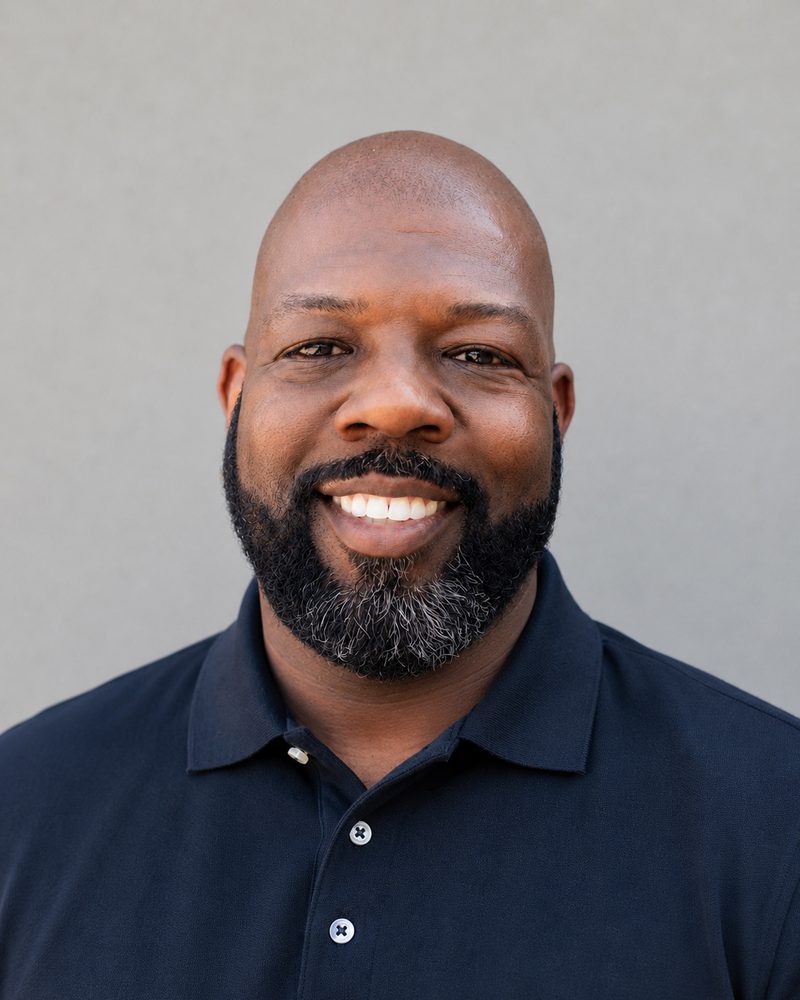
Dr. Michael Jones is a counselor educator and researcher, and a national voice on AI ethics and telemental health. Care in the Machine is his free weekly note on counseling, ethics, and the technology showing up in our work: teaching ideas you can use Monday, a few developments worth knowing, and an idea he is still working out.
Subscribe to Care in the Machine
A free weekly note on counseling, ethics, and the technology showing up in our work. Teaching ideas you can use Monday, and the next issue lands in your inbox.
Your information stays private.
We hate SPAM. We will never sell your information, for any reason.