
Care in the Machine No. 12: The Quiet Middle
Oct 18, 2026Care in the Machine is Dr. Michael Jones's weekly note on counseling, ethics, and the technology showing up in our work. It arrives by email every Monday. Subscribe here, or browse past issues.
Care in the Machine
A weekly note on counseling, ethics, and the technology showing up in our work.
Issue No. 12 · Tuesday, October 13, 2026
A reader wrote in after the last issue, the one where I told you what I've changed my mind on after eleven issues of doing this. She teaches in a counselor education doctoral program and keeps a caseload of her own besides, and she told me she's the group I said I hadn't heard enough from. The quiet middle. Trying AI carefully, with real caution, and still not sure she's doing it right.
Here's what she's actually sitting with. She and her doctoral students have started letting an AI tool help code interview transcripts and sort them into themes, a first pass before anybody reads a word by hand. Now she's looking at the IRB protocol that got her the green light for this research in the first place, and she can't find anywhere in it that anticipated what they're actually doing now.
I want to say plainly, that gap is not her fault. Most of our oversight paperwork was written for a world where the only hands on the data were human ones. I want to say just as plainly that the gap does not close itself. It closes when somebody goes and looks.
This week's teaching ideas
For the therapist. When a client tells you they've been talking something through with a chatbot between sessions, resist sorting that into good or bad before you've actually asked anything. A framework published this month in American Psychologist walks through five plain steps for exactly this moment: gather what you actually know about the tool, watch for risk signs early, size up how serious they are, do something about it before it becomes a crisis, then go back and check whether what you did worked. You don't need the five-stage name. You need to actually run the steps instead of improvising the first time it comes up.
For the supervisor. Ask your supervisees two questions this week, not one. First, has a client brought an AI habit or an AI relationship into the room. Second, and this one gets skipped, is anyone in their orbit, a doctoral student, a research assistant, running client-adjacent data through an AI tool without you knowing it. The second question is the one about to catch somebody off guard.
For the counselor educator. If an AI tool has touched a transcript, a survey response, or anything a participant actually said, in any project you oversee, go read your real IRB protocol language this week. Not what you remember agreeing to. The actual words on the page. Most protocols were written before this was happening and never said yes or no to it, which means you're standing in a gap, not a violation, but a gap you need to see with your own eyes rather than assume somebody already checked.
For the counselor in training. A new chatbot safety study found an AI tool correctly caught ninety three percent of real suicide-risk disclosures in a mental health app, and missed none of the most severe cases. That's a genuinely good number. Sit with the other side of it anyway. Ninety three percent still means somebody, eventually, is the seven. Practice being the one who checks, not the one who assumes the tool already did.
This week's free resource: Five Questions Before AI Touches Your Research Data
Built straight off this week's opening. One page for anyone supervising qualitative research where an AI tool might touch what a participant actually said, five questions to ask before it does. Ungated, because you're already on this list. Direct download: Five Questions Before AI Touches Your Research Data
This week in the field
Gihun Im published a conceptual framework this month adapting a decades-old risk-management model for clients who turn to generative AI for emotional support between sessions, without anyone clinically supervising that use: gather what's known about the tool, watch for risk signs, size up how serious they are, act on it early, then check whether it worked. So what for us: this gives us a concrete structure to actually run through the first time a client mentions leaning on a chatbot, instead of improvising it in the room (Im, 2026).
In the same October issue of American Psychologist, Jianning Dang and Liu Li synthesized research across three levels, how we interact with AI directly, how it shapes our sense of ourselves, and how it shapes our relationships with each other, on how relying on AI tools can lead people to see themselves or others as less fully human. So what for us: relational care ethics rests on treating the person on the other end as fully human, whether they're in the room or on a screen; this review hands us language for naming, with a client, exactly how that can erode (Dang & Li, 2026).
A preprint posted this month, not yet peer reviewed, looked at a stratified sample of real conversations from over thirty thousand U.S. adults using a mental health chatbot and found a safety-classification tool correctly escalated ninety three percent of conversations clinicians independently rated as containing actionable suicide risk, missing none of the most severe cases. So what for us: that's close to the real-world performance data any of us should want in hand before trusting an AI layer in a crisis pathway, and the preprint status is worth saying out loud if this comes up in supervision or with a client (Ward et al., 2026).
An idea to float
I keep coming back to that phrase, the quiet middle, because I don't think it only describes how clinicians are using AI right now. I think it describes where a lot of this profession lives most of the time, cautious, trying something out, not ready to call it a method and not ready to throw it out either. We don't have great language for that state. Our training tends to reward people who land somewhere definite, early adopter or holdout, expert or skeptic. The in-between gets treated like indecision instead of what it probably is, which is good judgment moving at the speed judgment actually moves. I'm not sure the middle needs defending. I think it might just need naming, so people stop apologizing for being in it.
Stay curious,
Dr. Jones
Michael Jones, PhD, LPC-S, NCC, BC-TMH
Renewing your BC-TMH?
Three ways to keep this current, all approved for BC-TMH renewal: Practicing Across State Lines walks through the law and safety questions of practicing across the Compact. AI at the Screen is two hours on the ethics of AI tools in teletherapy. Culturally Responsive Care: Presence Across the Screen is presence work built for telehealth specifically.
If you supervise at a distance, the Telemental Health Supervision Certificate is built for exactly that, alliance, ethics, documentation, and gatekeeping through a screen. And if AI ethics or telemental health is something you want in front of a room and not just a screen, my full catalogue of PESI trainings, live and on demand, is at my PESI speaker page.
Renewed Vision Counseling Services is the NBCC-Approved Continuing Education Provider (ACEP No. 6549). Counselor Education Collective is the training site where its continuing education is offered.
References
Dang, J., & Li, L. (2026). Dehumanization risks associated with artificial intelligence use. American Psychologist, 81(7), 1034-1047. https://doi.org/10.1037/amp0001542
Im, G. (2026). Ethical risk prevention in client generative artificial intelligence (genAI) use: Applying the primary risk-management model. American Psychologist, 81(7), 1048-1059. https://doi.org/10.1037/amp0001731
Ward, E. J., Bentley, K. H., & Dworkin, E. R. (2026). Detecting suicide risk with AI chatbots: Real-world performance within a clinically supervised workflow [Preprint]. Research Square. https://doi.org/10.21203/rs.3.rs-10882429/v1
Care in the Machine arrives by email every Monday, with teaching ideas, field notes, and a free resource each week. Subscribe here · Browse past issues
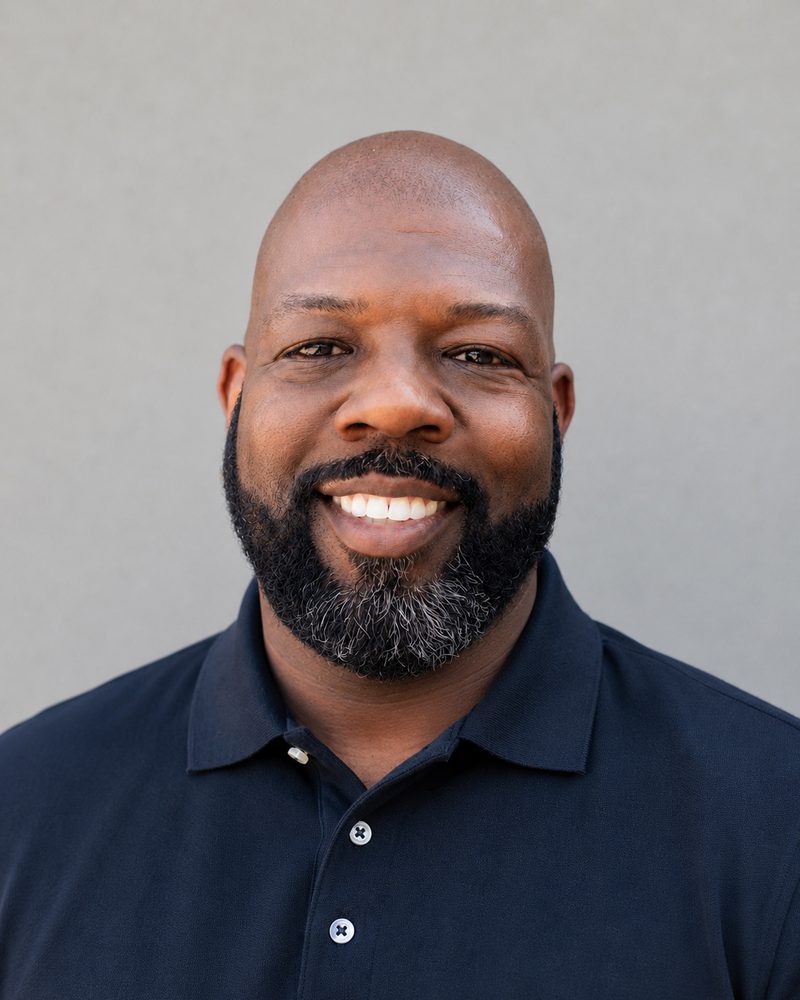
Dr. Michael Jones is a counselor educator and researcher, and a national voice on AI ethics and telemental health. Care in the Machine is his free weekly note on counseling, ethics, and the technology showing up in our work: teaching ideas you can use Monday, a few developments worth knowing, and an idea he is still working out.
Subscribe to Care in the Machine
A free weekly note on counseling, ethics, and the technology showing up in our work. Teaching ideas you can use Monday, and the next issue lands in your inbox.
Your information stays private.
We hate SPAM. We will never sell your information, for any reason.