
Care in the Machine No. 14: The Two-Thirds Who Never Tell You
Oct 26, 2026Care in the Machine is Dr. Michael Jones's weekly note on counseling, ethics, and the technology showing up in our work. It arrives by email every Monday. Subscribe here, or browse past issues.
Care in the Machine
A weekly note on counseling, ethics, and the technology showing up in our work.
Issue No. 14 · Monday, October 26, 2026
Picture a kid lying in bed, phone propped against a pillow, typing out the thing they have not said out loud to anyone yet. Not the school counselor. Not the parent down the hall. A chatbot.
A chatbot does not ask for an appointment. It does not require you to explain yourself once to a front desk and again to a person in a chair. It is there at eleven at night when the house has gone quiet and the thought will not leave. For a kid who already suspects something is wrong but has no name for it yet, and no clear read on which adult could hold it without flinching, that kind of access starts to look less like a last resort and more like the obvious first move.
A study published this past summer put a number to how common that picture is. In a nationally representative survey of 12 to 21 year olds, 19.2 percent had used an AI chatbot for mental health advice. Of those, 42.8 percent did it at least monthly, and 91.7 percent said the advice helped. Almost two thirds, 63.3 percent, had never told a single person (McBain et al., 2026).
Here's the number that stopped me longest. Conditional on already using a chatbot this way, Black youth were more than five times as likely as White youth to lean on it monthly or more. The researchers hold that figure loosely, the subgroup was small, but they offer two honest guesses: either these young people sense professionals are not responsive to who they are, or the professionals simply are not there (McBain et al., 2026). Twenty years in this field, and I believe both guesses can be true about the same kid, in the same breath.
They are already talking to something about their pain. In some rooms, more than they are talking to us. What I keep turning over is why they are not telling anyone, and what it would take for that to change.
This week's teaching ideas
For the therapist. You will not find this out by asking "are you using AI?" at intake and checking a box. Disclosure is a relationship, not a form field. Make the door easy to walk through later: tell clients early that you are curious, not checking up, about anything they lean on between sessions, chatbots included, and that nothing they say about it changes how you see them. Then let the door stay open. Most of this study's respondents never told anyone. Don't be the reason a client adds you to that list.
For the supervisor. A new qualitative study just gave us precise language for a line many supervisors already feel but have not named (Alotaibi & Sas, 2026). Eighteen practitioners welcomed AI help with assessment and with adjusting treatment over time. Every one of them drew a hard line at autonomous AI diagnosis, naming it the most ethically sensitive point in the whole process. Ask your supervisee this week which of the three stages, assessment, treatment, or diagnosis, any tool in their caseload is actually touching. If they cannot answer cleanly, that is the supervision conversation.
For the counselor educator. Hand your class four words without explanation: deceptive empathy, algorithmic bias, digital attachment, diffuse accountability. Ask them to define each one from what they already know about AI in session work before you tell them these are the four harms a new six-step ethical framework was built specifically to address, because older decision models were not built with AI in mind (Fulmer et al., 2026). Then walk a case vignette through all six steps together. Watching students reason through who is accountable here, when the honest answer is nobody, cleanly, teaches more than lecturing on it ever has for me.
For the counselor in training. A new national survey found people generally still prefer a human therapist, even a slower one, over an AI alone. But Black respondents were notably more open than other groups to AI-involved care, including AI monitored by a licensed therapist (Benda et al., 2026). Before you decide what that means, ask instead of assuming. Openness to a tool is not the same as preference for it, and it is almost never only about the tool.
This week's free resource
This issue leans on five studies and asks you to trust a lot of citations. In that spirit, this week's download is something different and practical: a reference guide for citing AI tools correctly in APA 7th edition, "APA 7 and Generative AI: Citing AI Tools." It covers how to cite an AI chat conversation (the case you'll hit most often), how to cite the tool itself, in-text citation format, what changed from the earlier 2023 guidance, and notes specific to clinicians, supervisors, and students.
Free, no second form to fill out. Subscribing is the opt-in. Download it here
From my desk
This week's free resource is a short guide to citing AI tools correctly, so it made sense for this segment to follow the actual week behind it, not just describe the finished handout.
What I did: I went looking for the approved file from two weeks back and couldn't find it anywhere, not in Drive, not saved where I'd normally keep it. Rather than let a rebuild drift from memory of what I'd approved, I pulled up APA's own style page, the primary source, and built the handout again from there.
Where I kept my hands on the wheel: every example in the handout gets checked against what APA's actual page says and the Publication Manual itself, not against an AI's memory of the rules. I also checked it had never run in a past issue before using it again.
Try this: before you trust any AI-generated citation guidance, including mine, open the primary style guide and check it yourself. The convenience is real. So is the chance it quietly gets something wrong.
This week in the field
A new six-step model finally gives AI-specific harms their own names. Older ethical decision-making models were not built with deceptive empathy, algorithmic bias, digital attachment, or diffuse accountability in mind, the ways a client can come to trust a chatbot's warmth, absorb its blind spots, grow attached to it, or get hurt by a harm nobody specifically owns. Fulmer, Xiong, and colleagues built a six-step model aimed at exactly those four, meant as a starting point for refinement rather than a finished answer (Fulmer et al., 2026). So what for us: this is the first framework I've seen built from the ground up for this specific problem rather than adapted from general AI ethics. Worth walking a real case through before you need it in a real session.
Eighteen practitioners, one hard line. Researchers interviewed eighteen mental health practitioners about where AI helps or hinders across assessment, diagnosis, and treatment, then sorted what they heard using the four biomedical ethics principles (Alotaibi & Sas, 2026). The practitioners were not reflexively anti-AI. They welcomed it for assessment and for adjusting treatment over time. Autonomous diagnosis was the one place every one of them resisted, naming bias and the erosion of clinical judgment as what worried them most. So what for us: a stage-specific yes-and-no is a sturdier policy than a blanket one, for a practice or a training program alike.
Who gets offered the faster, less human option, and who takes it. A national survey asked nearly 1,200 people to weigh a licensed therapist available in three months against a therapist-monitored AI available in a month, or an unmonitored AI available immediately. The human therapist drew the most support overall, but Black respondents were more likely than other groups to find AI-involved options, monitored or not, acceptable (Benda et al., 2026). So what for us: before reading that as a technology preference, ask what it is standing in for. An honest answer has to include who waits longest for care that looks like them.
An idea I'm floating
A new commentary raised something I have not been able to put down (Abdou, 2026). It argues that an AI's replies can each sound perfectly safe, careful wording, the right caution, and still add up to a conversation that was not safe at all, and that nobody has settled whose job it is to catch that. The developer built the model months before anyone had this exact conversation with it. A clinician, if there even is one in the room, never saw the exchange happen. The platform just hosts it.
Now put that next to how this issue opened. A kid talks to a chatbot for months, tells no one, and maybe every single reply sounded fine on its own. If that whole conversation was quietly heading somewhere bad, I genuinely do not know whose job it would have been to notice, and I'm not sure anyone does yet. I don't have a tidy place to set this thought down tonight. I'm just going to keep carrying it into next week.
Stay curious,
Dr. Jones
Michael Jones, PhD, LPC-S, NCC, BC-TMH
Renewing your BC-TMH?
Three two-hour courses count toward renewal, all approved for BC-TMH renewal: Practicing Across State Lines: Law, Ethics, and Safety in Telemental Health covers the Compact-era questions a license alone doesn't answer. AI at the Screen: Ethical Use of AI Tools in Teletherapy sits right in this issue's territory. Culturally Responsive Care: Presence Across the Screen rounds out the set. New to telehealth altogether? Telemental Health Provider Training is the full foundation.
Supervisors, the Telemental Health Supervision Certificate is built for alliance, ethics, and gatekeeping at a distance, the same ground this issue's eighteen practitioners were standing on when they drew their line at diagnosis.
Coming up with PESI, I'm teaching two live three-hour webinars this winter. Friend Requests and Ethical Wrecks (Thursday, January 21, 2027, 9:00am to 12:15pm Central) covers today's best practices for social media boundaries and dual relationships. Telehealth Update: Ethics, New Rules, and New Tools (Friday, January 29, 2027, 9:00am to 12:15pm Central) is exactly what it sounds like. Both are also available as digital seminars. Before that, I'll be at PESI's AI in Clinical Practice Conference, online, October 29 and 30. My full PESI catalogue is at pesi.com/speaker/michael-jones-3309293.
Renewed Vision Counseling Services is the NBCC-Approved Continuing Education Provider (ACEP No. 6549). Counselor Education Collective is the training site where its continuing education is offered.
References
Abdou, B. A. (2026). When safe responses lead to unsafe conversations: Patient safety and accountability in mental health artificial intelligence-based applications. Global Journal on Quality and Safety in Healthcare, 9(4), 92-95. https://doi.org/10.36401/jqsh-26-x6
Alotaibi, A., & Sas, C. (2026). "There is a place for it": Practitioners' perspectives on situated ethical acceptability of AI technologies for mental health practice: Qualitative study. JMIR Mental Health, 13, e91884. https://doi.org/10.2196/91884
Benda, N. C., Suresh, U., Shamnath, A., Buitron, I., Salwei, M. E., Novak, L. L., Xu, X., & Reading Turchioe, M. (2026). Public perceptions of timeliness for AI use and human oversight. JAMA Network Open, 9(10), e2639048. https://doi.org/10.1001/jamanetworkopen.2026.39048
Fulmer, R., Xiong, Y., Zhai, Y., Lee, J., Nkya, G., & Naugle, R. (2026). Ethical decision-making for large language model use: A six-step model for mental health professionals. Frontiers in Psychology, 17. https://doi.org/10.3389/fpsyg.2026.1998626
McBain, R. K., Cantor, J. H., Breslau, J., Diliberti, M., Zhang, L. A., Zhang, F., Burnett, A., Kofner, A., Rader, B., Pataranutaporn, P., Stein, B. D., Mehrotra, A., & Yu, H. (2026). AI chatbot use and disclosure for mental health among US adolescents and young adults. JAMA Pediatrics, 180(8), 884. https://doi.org/10.1001/jamapediatrics.2026.2015
Care in the Machine arrives by email every Monday, with teaching ideas, field notes, and a free resource each week. Subscribe here · Browse past issues
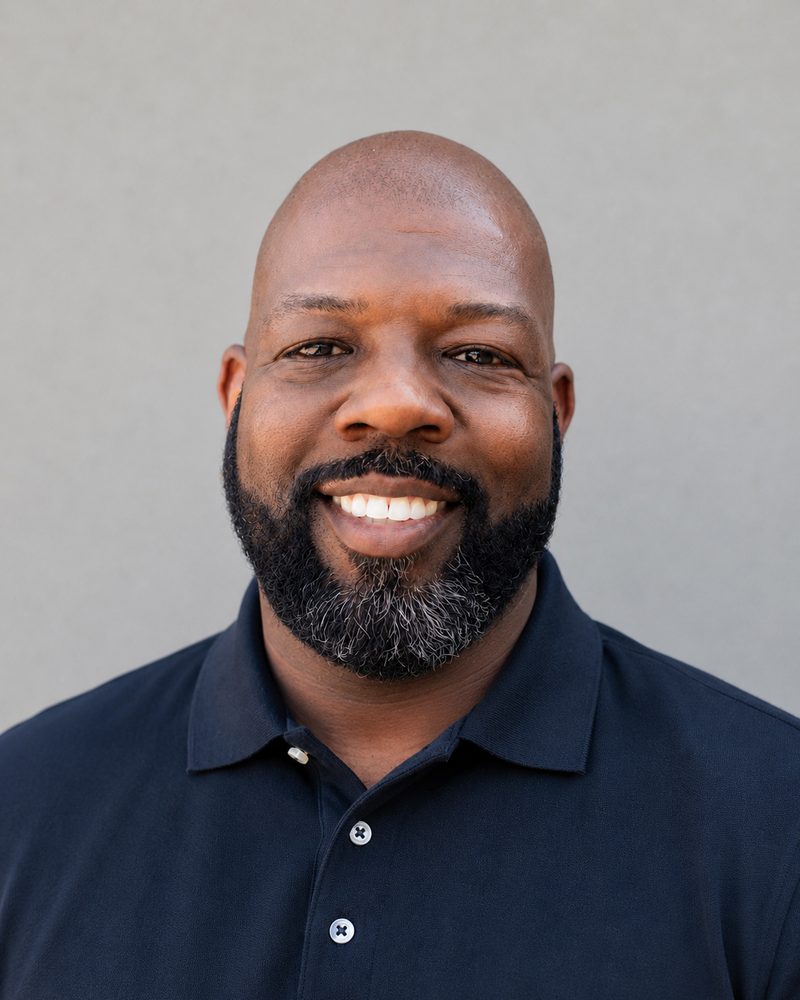
Dr. Michael Jones is a counselor educator and researcher, and a national voice on AI ethics and telemental health. Care in the Machine is his free weekly note on counseling, ethics, and the technology showing up in our work: teaching ideas you can use Monday, a few developments worth knowing, and an idea he is still working out.
Subscribe to Care in the Machine
A free weekly note on counseling, ethics, and the technology showing up in our work. Teaching ideas you can use Monday, and the next issue lands in your inbox.
Your information stays private.
We hate SPAM. We will never sell your information, for any reason.