
Care in the Machine No. 2: Your Client's Other Counselor
Aug 10, 2026Care in the Machine is Dr. Michael Jones's weekly note on counseling, ethics, and the technology showing up in our work. It arrives by email every Monday. Subscribe here, or browse past issues.
Care in the Machine
A weekly note on counseling, ethics, and the technology showing up in our work.
Issue No. 2 · Monday, August 10, 2026
It is 11:40 on a school night and a sixteen-year-old has her phone brightness turned all the way down. She is asking a chatbot what to do about the panic that shows up before first period. She has asked it before. The answer helped, or felt like it did. Her mother does not know. Her doctor does not know. No adult in her life knows.
New survey data out of Harvard says she has plenty of company. Roughly one in five adolescents and young adults now turn to AI chatbots for mental health advice, up from about one in eight a year earlier. More than 90 percent say the advice was useful. And most have never mentioned it to a parent, a physician, or any adult at all (Harvard Gazette, August 3).
The usage is striking. The secrecy is the part that should stop us. Young clients are arriving in our offices already inside a helping relationship, one they consult regularly and trust enough to hide from everyone with a pulse. That is clinical material. This issue is about learning to work with it.
This week's teaching ideas
For the therapist. Add one question to your intake and your check-ins: "Some people talk things over with an AI chatbot between sessions. Is that something you ever do?" Ask it the way you ask about sleep or caffeine, plainly, with no raised eyebrow. Shame is exactly what keeps this use hidden, and a client who catches a flicker of judgment on the first pass will not offer you a second one. The goal is simple: find out who else is helping, and what that helper is being trusted with.
For the supervisor. When a supervisee presents a young client this month, add one question to case conceptualization: what might a chatbot be holding for this client that the humans around them are not? If the answer is "I never asked," you have found the supervision moment. While you are at it, ask your supervisee what they feel about AI. Fulmer and colleagues surveyed counselors this year on exactly that, their attitudes, their emotional responses, their ethical concerns, and the premise belongs in supervision: ethical judgment happens inside whatever the clinician is feeling about the tool. Anxiety distorts one way. Enthusiasm distorts another.
Fulmer, R., Zhai, Y., & Beeson, E. T. (2026). Counsellors' attitudes, emotions, and ethical concerns regarding artificial intelligence: Results from a professional survey. Counselling and Psychotherapy Research, 26(1), Article e70086. https://doi.org/10.1002/capr.70086
For the counselor educator. A West Virginia University team tested whether AI could write realistic psychiatric training vignettes, including cases where the patient uses chatbots, which is exactly the clinical picture your students will meet in practicum. The vignettes scored high on diagnostic accuracy and educational value, and the authors still put faculty review, structured debriefing, and risk assessment ahead of any classroom use. Read that conclusion twice. AI can draft the case. The formation of a counselor happens in the debriefing, where a student discovers what the case stirred in them and what they missed. If your program is experimenting with AI-written case material, build the reflective container first. The paper is open access, so you can hand it to your faculty today.
Zheng, W., Chandran, D. N., Elswick, D. E., Nouyed, M. I., & Hu, G. (2026). Evaluation of artificial intelligence-generated vignettes depicting patient chatbot use in psychiatric contexts. npj Digital Medicine, 9, Article 517. https://doi.org/10.1038/s41746-026-02605-6
For the counselor in training. Before a practicum client ever tells you about their chatbot, write one honest page about your own reactions to AI. The worry, the curiosity, the grief, the wish that it would all slow down. Researchers have started mapping how the profession feels about this technology, and the picture that comes back is honest ambivalence, useful ideas and real unease living in the same people. Your reactions are data. Name them on paper now, because unnamed, they will show up on your face at the exact moment a client is deciding whether you can handle the truth.
This week's free resource
Asking About AI, a one-page guide to talking with clients about their chatbot use.
The opening question, four follow-ups that open instead of close, what to listen for underneath the answer, and three moves that shut the whole thing down before it starts. There is a short note for supervisors and one for anyone teaching this in a classroom. Print it, mark it up, throw out the parts that do not fit your setting.
From my desk
I used to lose a good ten minutes just finding the file. That is the part connectors quietly fixed for me.
A connector lets Claude reach into the tools I already live in, my Drive, my calendar, my planning notes. On an ordinary Tuesday I asked it to pull an old presentation out of my Google Drive, one I half-remembered from a couple of years back, and reshape it into a fresh CE deck in Gamma. It found the file, kept my language, and handed me a working draft. Another morning it read my calendar and helped me guard my writing time before the week ate it.
Here is where I keep my hands on the wheel. A connector can see into your accounts, so I am deliberate about which ones I turn on and what lives in them. Nothing client-identifying goes anywhere a connector can reach. I read everything before it goes out. The convenience is real, and the responsibility of handing a tool the keys is real too.
Try this: turn on one connector this week, something low-stakes like your calendar or a folder of your own teaching files. Notice where it saves you time, and where you still want your own eyes on the work.
This week in the field
Colorado put a date on chatbot accountability.
Colorado's Chatbot Safety Act (HB 26-1263) was signed May 29 and takes effect January 1, 2027, with the Attorney General's rulemaking underway now. It will require conversational AI services to disclose that users are talking to AI, keep a documented protocol for responding to suicidal ideation, protect minors from design features that engineer emotional dependence, and refrain from claiming chatbot output equals the services of a licensed professional.
So what for us: that last clause draws a statutory line between conversational AI and licensed care, and it hands clinicians concrete language for the client who believes a companion app is therapy. The minor-protection language goes further. A legislature just named engineered emotional dependence as a product defect, and our ethics codes call something close to that a boundary violation. Hand your students the statute and the ACA Code side by side and ask where they agree, and where the law sees harms our code has not yet named.
Counselor education mapped its own ambivalence.
Our flagship journal published the study your faculty needs back in January. I would bet the department budget that nobody in your building has read it. Crofford, Bor, and Kemer used concept mapping with 31 counseling professionals, educators, supervisors, clinicians, and trainees among them, to chart where AI belongs in counselor education and supervision. The resulting map holds scholarship assistance, administrative relief, instructional design, and supervisory process alongside a candid region the participants named Growing Pains: ethics, professional identity, training gaps.
So what for us: the same people mapped the uses and the unease, and that is what honest discernment looks like. If your faculty is stuck between one enthusiastic colleague and one alarmed memo, this study is an empirically derived agenda for the conversation you have been putting off. Somebody has to walk it into the room.
Crofford, H., Bor, E., & Kemer, G. (2026). Counseling professionals' perspectives on AI integration in education and supervision: A concept mapping study. Counselor Education and Supervision, 65(1), 22-32. https://doi.org/10.1002/ceas.70016
USC wants to read risk off the body.
A USC team recorded brain signals, eye movements, and skin conductance while young adults responded to emotional statements, and reported machine-detectable patterns associated with depression and suicidal ideation. The team is explicit that these tools are meant to supplement clinical assessment.
So what for us: risk assessment is one of the most anxiety-laden competencies we teach, and a tool promising objective detection will be attractive precisely because it promises relief from that anxiety. A physiological flag can inform judgment. It cannot sit in the chair where a client decides whether to tell the truth about wanting to die, and where a counselor earns the trust that makes that truth speakable. Raise it in practicum now: what does a flag change in the alliance? Your students should have an answer before a vendor supplies one.
Avramidis, K., et al. (2026). Deep learning characterizes depression and suicidal ideation in young adults from eye movements. npj Digital Medicine, 9, Article 393. https://doi.org/10.1038/s41746-026-02550-4
An idea I'm floating
A reader who spends her days doing play therapy with children and teens wrote after the first issue, asking, in so many words, where a clinician who works with youth even starts with all this. Her question has been sitting with me all week, right next to that Harvard number.
Here is the thought I am testing. Maybe we should treat a young client's chatbot the way family therapists treat any significant attachment in the system. Put it in the genogram. Ask what it gets confided, what it soothes, what it spares the client from having to say to a person. A tool question asks whether the chatbot is good or safe. A relationship question asks what role it plays in this particular life. I suspect the relationship question is the clinical one, and I am still working out what follows from it.
A full issue on young people and AI is coming. If you work with kids and teens, hit reply and tell me what you are seeing. What you send shapes what I build.
Stay curious,
Dr. Jones
Michael Jones, PhD, LPC-S, NCC, BC-TMH
Renewing your BC-TMH?
Three short courses at the Counselor Education Collective count toward renewal, each two clock hours, each $39:
- Practicing Across State Lines: Law, Ethics, and Safety in Telemental Health
- AI at the Screen: Ethical Use of AI Tools in Teletherapy
- Culturally Responsive Care: Presence Across the Screen
Continuing education is provided by Renewed Vision Counseling Services, NBCC-Approved Continuing Education Provider, ACEP No. 6549. The Counselor Education Collective is the home of the catalog.
Coming August 17: the Telemental Health Supervision Certificate, six hours for supervisors doing the real work of alliance, ethics, and gatekeeping at a distance. Join the waitlist.
On my calendar: PESI's AI in Clinical Practice conference, October 29 and 30, 2026. I will be there; details and registration here.
Care in the Machine arrives by email every Monday, with teaching ideas, field notes, and a free resource each week. Subscribe here · Browse past issues
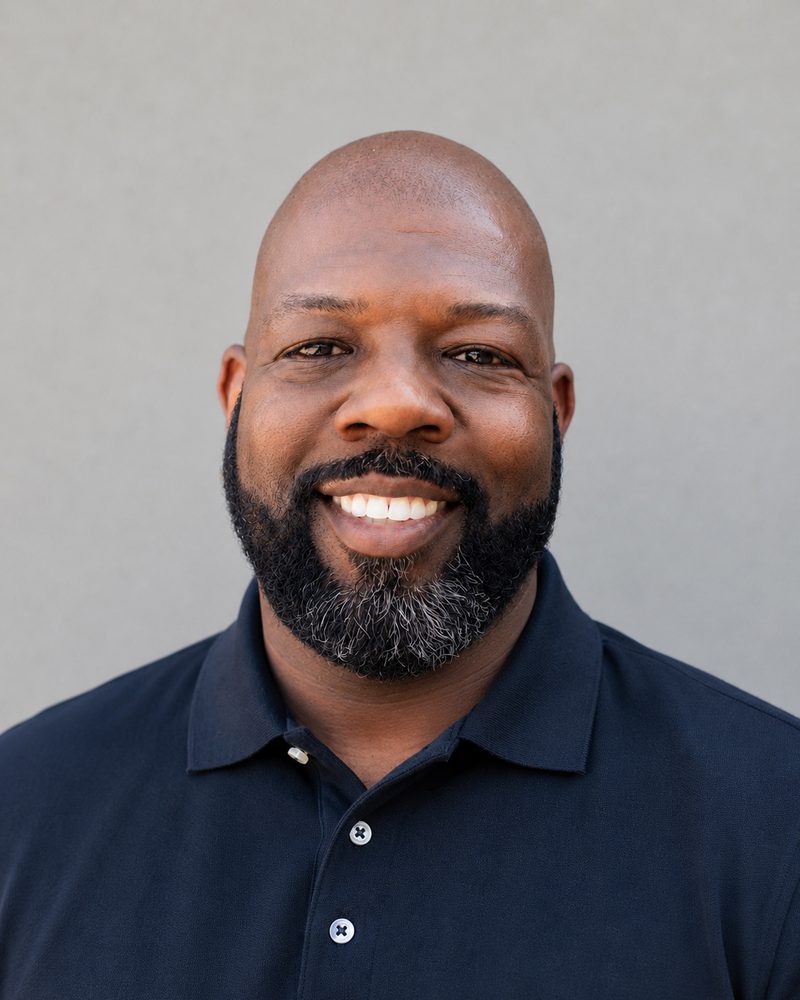
Dr. Michael Jones is a counselor educator and researcher, and a national voice on AI ethics and telemental health. Care in the Machine is his free weekly note on counseling, ethics, and the technology showing up in our work: teaching ideas you can use Monday, a few developments worth knowing, and an idea he is still working out.
Subscribe to Care in the Machine
A free weekly note on counseling, ethics, and the technology showing up in our work. Teaching ideas you can use Monday, and the next issue lands in your inbox.
Your information stays private.
We hate SPAM. We will never sell your information, for any reason.