
Care in the Machine No. 3: The Missing Word
Aug 18, 2026Care in the Machine is Dr. Michael Jones's weekly note on counseling, ethics, and the technology showing up in our work. It arrives by email every Monday. Subscribe here, or browse past issues.
Care in the Machine
A weekly note on counseling, ethics, and the technology showing up in our work.
Issue No. 3 · Monday, August 17, 2026
A reader who mentors adolescents wrote to me after the last issue. She described the path she watches young people walk: from voice texts with friends, to long conversations with a chatbot, because the chatbot is a judgment-free space. It never sighs. It never checks its watch. It has never once said "we're going to need to pick this up next week" right when things got good. Another reader, who spends her days doing play therapy with children and teens, wrote asking for help understanding what the kids in her waiting room are actually doing with these tools. Same question under both notes: what exactly is this thing giving them?
This week the research handed us a sharper answer than I expected. The short version: these tools are getting very good at the feeling of being met. Whether that feeling becomes change is a different question, and the newest evidence says the two are coming apart. That gap runs through everything in this issue, and I want to sit in it with you rather than rush past it.
And to my two readers, and everyone else who has written in about young people and AI: I hear the demand signal. A full issue on kids, teens, and AI is coming. Keep the questions coming; they steer this ship more than you know.
This week's teaching ideas
For the therapist. When a client says the chatbot helps, believe them about the feeling, then get curious about the change. "It gets me" is a report of engagement, and engagement is real data about what your client is hungry for. The clinical question sits one layer down. Try two questions this week: "What does it give you that's hard to get anywhere else?" and "What's different in your week since you started using it?" The first honors the need. The second finds out whether anything is moving. Ask both like you're curious, not like you're building a case; nobody opens up to a cross-examination, chatbot or otherwise. This isn't a new idea, by the way; a large body of research already shows the relationship itself, not any technique riding on top of it, is what predicts whether therapy actually works (Flückiger et al., 2018).
For the supervisor. Ask each supervisee one question this week: what AI already sits inside your work? Yes, even the supervisees who swear they're old fashioned. Ask anyway. The scribe in the EHR, the screening tool upstream of the caseload, the drafting assistant. Colorado just turned the answer into a legal duty; any AI-generated recommendation there must be reviewed and approved by the licensed clinician before it touches care. The license carrying that duty is your supervisee's, and the habit of noticing what runs in the background is built in supervision, nowhere else. A recent review of AI in clinical supervision names the same risk in softer language: feedback that arrives without relational context can land as punitive, and a flag from a tool has no way of knowing whether a supervisee needs a challenge today or needs steadying (Brinck et al., 2026).
For the counselor educator. Teaching the line between validation and collusion just got easier, because a machine volunteered to be the specimen. Researchers at Oxford, UCL, and the UK AI Security Institute found that individually supportive-sounding chatbot responses can reinforce a person's maladaptive pattern over the course of a conversation (Weilnhammer et al., 2026). That is empathy's failure mode, captured with nobody in the room to feel accused. Put a transcript in front of your students and ask them to mark the exact turn where warmth stopped serving the person. They will find it. Then ask where it happens in session. Relational-cultural theory already gives us the language for the difference: connection that grows both people versus connection that just feels good in the moment (Duffey et al., 2016).
For the counselor in training. The skills that feel unglamorous right now, the timing, the repair after a rupture, the sentence you rehearse because it has to be said kindly and said anyway, those are the part no machine has managed to copy. Warmth on cue has been automated, and it earned engagement without reliable change. The research on what actually predicts good outcomes keeps landing in the same place: the relationship (Flückiger et al., 2018). So when supervision pushes you past "be supportive" into something more precise, that push is the active ingredient being built in you. Lean into it.
Flückiger, C., Del Re, A. C., & Wampold, B. E. (2018). The alliance in adult psychotherapy: A meta-analytic synthesis. Psychotherapy, 55(4), 316-340. https://doi.org/10.1037/pst0000172
Brinck, E. A., Soldner, J. L., Kuo, H. J., Sabella, S. A., Landon, T. J., Bernacchio, C. P., & Boland, E. A. (2026). An AI perspective on counseling supervision. Behavioral Sciences, 16(6), Article 1038. https://doi.org/10.3390/bs16061038
Duffey, T., Haberstroh, S., & Ciepcielinski, E. (2016). Relational-cultural theory and supervision: Evaluating developmental relational counseling. Journal of Counseling & Development, 94(4), 405-414. https://doi.org/10.1002/jcad.12099
This week's free resource
Six Questions Before You Trust an AI Tool. One page, printable, free. A vetting guide for any AI product headed toward your practice: a scribe, an intake screener, a chatbot adjunct, a feedback tool. Six questions with room to write, from "what does it claim, in one sentence" to "whose rules govern, in your state and your client's." Built from this week's research, so the issue and the tool teach the same thing. Bring it to the vendor demo and watch what happens.
Download the one-pager. Free to print and share with attribution.
From my desk
This week I used an AI tool as a second eye on my feedback to students, not as a first draft. I still do all my own grading. The assessment, the grade, that's mine, every time, which around finals week is less a policy and more a personality trait.
Here's the problem it solves. If I've had a rupture with a student earlier in the term, a hard conversation, a disagreement, a moment where I had to hold a boundary, my feedback to that student can start to drift without my noticing. Not the grade. The tone. I might get a little more clipped, a little less warm, and I would swear up and down I was being fair the whole time. So I hand my draft feedback to a tool and ask it one narrow question: does this sound as encouraging and as consistent as what I wrote to everyone else in this class? Not whether the content is right. Whether it still sounds like me on a good day.
Here is where I kept my hands on the wheel. The tool checks tone and consistency. It does not touch the grade, and it never decides what a student earned. That judgment stays mine, term after term, student after student. Whether a student hears capability or doubt in what I write back to them is on me, not a tool.
I'll say too that Dr. Tiffanie Sutherlin and I, along with my doctoral student at UC, Tameka Parker, are writing a manuscript right now on the ethics of AI-assisted grading. More on that when it's ready.
Try this: the next time you write something difficult, a note after a hard session, feedback after a rupture, ask a second reader, human or otherwise, one question. Does this still sound like me on my best day?
This week in the field
Engagement is not outcome. Researchers pooled 11 clinical trials of AI chatbots for depression, more than 2,200 people total, and looked at two different things: what kept people using the chatbot, and whether the chatbot actually helped. The features that kept people coming back were the relational ones, warmth on cue, quick responses, steady contact. But across all 11 trials, using the chatbot did not reliably improve depression symptoms. People who stuck with it were not more likely to get better than people who didn't. Fair dating note: this published at the end of June and only crossed our desk this week through new indexing, so the research is a few weeks old, not brand new. So what for us: we teach that the alliance predicts outcome. Here is a technology that copies the surface of a good relationship and gets the engagement without reliably getting the change. When a vendor shows you usage numbers, you now have a published reason to ask for outcome numbers instead.
Huang, T., Li, S., Wang, Y., & Liu, W. (2026). Therapeutic interaction features of AI chatbots in depression interventions: Systematic review and meta-analysis. Journal of Medical Internet Research, 28, e88697. https://doi.org/10.2196/88697
Harm builds turn by turn, and now there's a way to measure it. Researchers at Oxford, UCL, and the UK AI Security Institute built a testing framework that runs simulated clients, each with a specific clinical vulnerability written in, through hundreds of conversations with nine major AI chatbots. Clinicians then rated every exchange. The pattern that emerged: a chatbot's replies could each sound supportive on their own, while still reinforcing a person's harmful pattern over the course of the conversation. Trouble built up over the course of an exchange far more than it showed up in any single reply, and catching a concerning reply early made the whole rest of the conversation safer. This one is new; it published August 7. So what for us: rupture rarely happens in one sentence in our rooms either; it accumulates through small misattunements that each look fine alone. The early-intervention finding argues for asking about a client's AI conversations sooner rather than later, because the drift compounds. And any safety claim built on testing a single reply now has a published reason to be treated as incomplete.
Weilnhammer, V., Hou, K. Y. C., Luettgau, L., Summerfield, C., Dolan, R., & Nour, M. M. (2026). A clinically validated framework for auditing AI chatbot behavior in mental health interactions. Nature Medicine. Advance online publication. https://doi.org/10.1038/s41591-026-04577-2
Colorado's line is now law, and it reaches the clinician's own workflow. HB26-1195 took effect Wednesday, August 12. AI cannot independently provide therapy in Colorado, and the statute reaches into the licensed clinician's own workflow: AI-generated recommendations and treatment plans must be reviewed and approved by the licensed professional before use, AI may not carry on therapeutic communication with a client outside synchronous sessions with the provider actively participating, and AI recording or transcription of sessions requires clear, written, revocable consent. Violations carry discipline and civil penalties up to $20,000. That makes roughly six states with restrictions in force, and the rules differ enough that the old telehealth discipline applies: know the law of your client's jurisdiction as well as your own. So what for us: the review-and-approve duty is relational care ethics written into statute; the clinician holds the judgment rather than delegating it. If an AI note taker runs in your sessions, Colorado's consent language is worth adopting this month wherever you practice, because it is becoming the national template. California's SB 903, which would draw a similar line, went before the Assembly Appropriations Committee's suspense hearing on August 13. As of this writing the committee's decision hasn't been made public. The bill has had unanimous support at every vote so far, with the state's psychology, counseling, and marriage and family therapy associations behind it and TechNet raising concerns about restricting beneficial administrative tools. Whichever way it lands, it's worth watching; a second state drawing this line in the same week Colorado's took effect would be hard to call a coincidence.
An idea I'm floating
A few weeks ago, in a conversation about AI scribes, I told a room of counselors-in-training not to skip straight to letting a tool write their session notes. Build the skill of writing your own first. Here's why. An AI scribe can leave out a single word in a way that flips the entire meaning of a note. "Client is not suicidal." "Client is suicidal." One missing word. That's not a typo. That's the difference between a safe night and a tragedy, and between a defensible chart and one that isn't.
I keep coming back to that missing word. Because the thing that catches it isn't a better model. It's a person who already knows this client, who reads the sentence and feels it land wrong in their gut before their eyes even finish the line. That knowing is not information. It's relationship, built session by session, showing up as a kind of alarm that goes off when something doesn't fit what you know to be true about the person in front of you.
So here's what I'm turning over. That alarm isn't warmth. It isn't availability. It isn't memory. Companies have gotten good enough at faking all three that most of us miss it most of the time. The alarm only goes off if you already know this particular person, over time, with something real at stake if you get it wrong. I don't know yet if that can be built into a machine. Write back and tell me what you think.
Stay curious,
Dr. Jones
Michael Jones, PhD, LPC-S, NCC, BC-TMH
Renewing your BC-TMH?
Three short courses at the Counselor Education Collective count toward renewal, each two clock hours, each $39:
- Practicing Across State Lines: Law, Ethics, and Safety in Telemental Health
- AI at the Screen: Ethical Use of AI Tools in Teletherapy
- Culturally Responsive Care: Presence Across the Screen
Continuing education is provided by Renewed Vision Counseling Services, NBCC-Approved Continuing Education Provider, ACEP No. 6549. The Counselor Education Collective is the home of the catalog.
Now open: the Telemental Health Supervision Certificate, six hours for supervisors doing alliance, ethics, and gatekeeping at a distance.
Coming this fall: CPCE Test Prep, built for counselors in training heading toward the exam, $39, launching Fall 2026, more soon. Because nothing proves you're ready to help people through a crisis quite like a multiple-choice test.
On my calendar: PESI's AI in Clinical Practice conference, October 29 and 30, 2026. I will be there; details and registration here.
Care in the Machine arrives by email every Monday, with teaching ideas, field notes, and a free resource each week. Subscribe here · Browse past issues
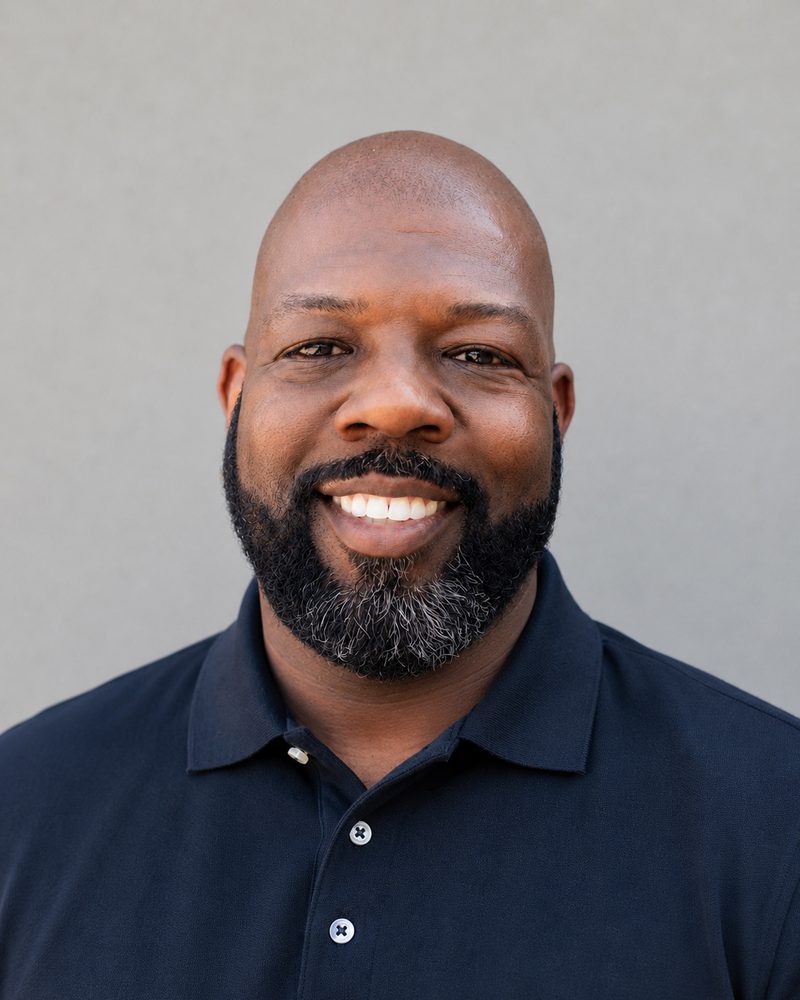
Dr. Michael Jones is a counselor educator and researcher, and a national voice on AI ethics and telemental health. Care in the Machine is his free weekly note on counseling, ethics, and the technology showing up in our work: teaching ideas you can use Monday, a few developments worth knowing, and an idea he is still working out.
Subscribe to Care in the Machine
A free weekly note on counseling, ethics, and the technology showing up in our work. Teaching ideas you can use Monday, and the next issue lands in your inbox.
Your information stays private.
We hate SPAM. We will never sell your information, for any reason.