
Care in the Machine No. 9: The Fine Print
Oct 05, 2026Care in the Machine is Dr. Michael Jones's weekly note on counseling, ethics, and the technology showing up in our work. It arrives by email every Monday. Subscribe here, or browse past issues.
Care in the Machine
A weekly note on counseling, ethics, and the technology showing up in our work.
Issue No. 9 · Monday, September 28, 2026
In Hawaii this spring, a state representative sat down with a chatbot safety bill and noticed language that did not sound like anything a legislator would write. It read like it had been built to look strong on paper and do almost nothing in practice, an exemption carved wide enough to let the most-used chatbots walk right through it. She traced where it came from. Google had supplied it. She took it out before the bill became law.
That is one lawmaker, in one state, paying close enough attention to catch what was hiding in plain sight. An NPR investigation published this month found the same pattern repeating in Colorado, Iowa, Nebraska, and Arizona: the companies selling the chatbots are also the ones lobbying to write the rules meant to restrain them. Colorado's bill passed anyway, with twelve exemption categories critics say could shield the biggest chatbots from ever being covered by it. Arizona's governor looked at a similar bill and vetoed it, saying plainly that it protected industry over children.
I keep coming back to the Hawaii story because of what it actually took. One person, reading closely enough to recognize borrowed language for what it was. Most of us are never going to sit in that committee room. We are not lawyers, the bill language moves fast, and nobody trained us to read a statute. But the question underneath all of it belongs to us as much as to any legislator. When a client tells you they've been talking to an AI companion app at two in the morning because it never gets tired of listening, the exemption category that app's home state carved out for it is not a policy footnote. It is the room your client is actually standing in.
This week's teaching ideas
For the therapist. Whatever your state's chatbot law currently exempts, don't let the exemption set your own standard of care. If a client names an AI companion or wellness app as part of their routine, ask about it with the same informed-consent scrutiny you'd bring to any clinical tool, regardless of what the statute happens to require this year. The law is playing catch-up. Your judgment doesn't have to.
For the supervisor. Ask your supervisees one direct question this week: does the state you practice in exempt AI companion apps from anything, and do either of you know why. If neither of you can answer, that gap belongs in supervision, not on a shelf. Gatekeeping used to mean knowing your supervisee's caseload. Now it also means knowing what the law does and does not require of the tools showing up inside that caseload.
For the counselor educator. Teach the Hawaii story as more than a headline. It's a lesson in how legislation actually gets made, one paragraph at a time, by whoever shows up to write it. Students who believe a bill is finished the moment it's introduced never learn that a public comment period is a door, not a formality. Show them the door.
For the counselor in training. Spend the five minutes this week to look up whatever AI chatbot legislation is pending or recently passed in your own state. Note what it requires and what it exempts. You don't have to become a policy expert. You do have to know the ground you're standing on before you tell a client it's safe.
This week's free resource: Reading the Fine Print
A one-page field guide for reading any pending AI chatbot bill the way that Hawaii legislator did: four questions that tell you what an exemption is actually protecting, a plain-language way to find your own state's bill, and a short template if you decide the exemption is worth speaking up about.
Download it here (no form, no gate)
Subscribers get the resource free every week. That is the deal: you signed up, you get the tools.
From my desk
This week I've been building the CPCE test prep, the boards exam so many of you are studying for alongside a full caseload and a full life. Before writing another practice item, I sent an agent out to read what test-takers are actually saying in places like Reddit: which content areas trip people up, where the review guides go thin, what test day actually feels like.
Here's where I kept my hands on the wheel. A forum thread carries one person's frustrated Tuesday. Turning frustration into a training decision takes someone who already knows the terrain, years of grading comps, reviewing coursework, sitting with students who didn't pass the first time. I read through what the agent found myself, checked it against what I already knew, and only let a pattern shape the prep plan when it showed up more than once and matched what I'd seen directly in my own students.
Try this: before you build or revise a training, have an assistant summarize what real people say about the gap you're trying to fill, in forums, reviews, wherever people talk honestly. Then go read the actual quotes yourself before you trust the summary. A pattern only counts if you can point to where it came from.
This week in the field
A new meta-analysis pooling ten studies and nearly two thousand participants found no overall difference in how readily people accept AI-based psychotherapy compared to the conventional kind, but real variation underneath that number: acceptance shifts with the type of AI, with cultural background, and, oddly, runs lower in the newer, larger, more carefully done studies (Fan et al., 2026). So what for us: stop treating "clients are fine with AI" as a settled premise. Cultural background moving the number is a culturally responsive practice issue, not a footnote, and that last trend is worth saying out loud the next time someone pitches you a tool as already proven.
A team at UTHealth and Yale benchmarked a multimodal AI model against expert psychiatrists on the Mental Status Examination and found it kept pace on the parts you can see, speech, affect, the visible surface of a person, and fell apart on the parts that require reading what a person's presentation actually means (Mwangi et al., 2026). I want to name a caveat plainly: this is a preprint, not yet published in a peer-reviewed journal, even though the press coverage announcing it reads as settled fact. I'm citing it anyway because the finding is worth your attention and the caveat is easy to hold alongside it. The exact place this model broke down, inferring meaning rather than cataloguing what's visible, is the place clinical judgment actually lives.
California's SB 903, which would require informed consent before AI touches a therapy session and bars AI from making clinical decisions on its own, is still sitting on the Governor's desk as I write this, with a September 30 deadline to sign or veto. By the time you read this Monday, it may already be decided.
An idea to float
Here's what stays with me from the Hawaii story. One representative, reading closely enough to catch language that didn't belong. That is not a system. It's a person paying attention, and any system that depends on one person's attention will eventually fail the day that person is tired, or reassigned, or simply outnumbered by how many bills move through a session. I don't know who should be doing that reading at scale for our field specifically, a professional body, a state licensing board, something that doesn't exist yet. I know the read has to happen somewhere, by someone whose paycheck doesn't depend on the answer coming back clean. I'm not going to pretend I have the org chart for that. I just keep noticing how much weight sits on one person's attention, and how rarely we ask whose job it's supposed to be.
Stay curious,
Dr. Jones
Michael Jones, PhD, LPC-S, NCC, BC-TMH
Renewing your BC-TMH?
Three short courses at the Counselor Education Collective count toward renewal, each two clock hours, each $39:
- Practicing Across State Lines: Law, Ethics, and Safety in Telemental Health
- AI at the Screen: Ethical Use of AI Tools in Teletherapy
- Culturally Responsive Care: Presence Across the Screen
Continuing education is provided by Renewed Vision Counseling Services, NBCC-Approved Continuing Education Provider, ACEP No. 6549. The Counselor Education Collective is the storefront for all courses.
Supervising through a screen? The Telemental Health Supervision Certificate is live: six hours on alliance, ethics, documentation, and gatekeeping at a distance.
Save the date: PESI's AI in Clinical Practice conference, October 29 and 30, 2026. I will be there; registration and details here.
More of my work at PESI. My trainings there run from AI and the ethics of digital afterlives, with Megan Devine, to advanced grief counseling. Browse my PESI catalogue
References
Fan, M., Xie, X., & Xia, T. (2026). A meta-analysis of the acceptance of artificial intelligence in psychotherapy. Behavioral Sciences, 16(9), Article 1552. https://doi.org/10.3390/bs16091552
Mwangi, B., Hamoudi, H. J. A. S., & Sanches, M. (2026, April 20). Human vs AI clinical assessment: Benchmarking a multimodal foundation model against multi-center expert judgment on the mental status examination [Preprint]. openRxiv. https://doi.org/10.64898/2026.04.17.26351105
News sources (not peer-reviewed): NPR investigation, September 18, 2026, on tech industry lobbying in state AI chatbot safety legislation. California SB 903 status confirmed against the daily scan log through September 24, 2026.
Care in the Machine arrives by email every Monday, with teaching ideas, field notes, and a free resource each week. Subscribe here · Browse past issues
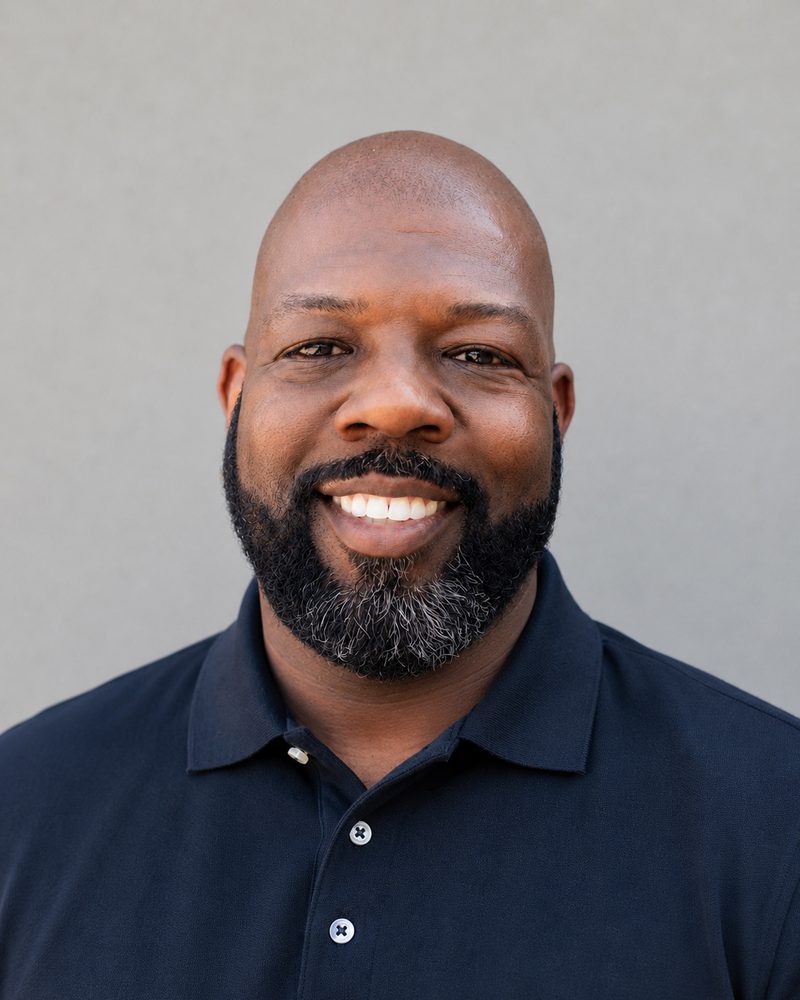
Dr. Michael Jones is a counselor educator and researcher, and a national voice on AI ethics and telemental health. Care in the Machine is his free weekly note on counseling, ethics, and the technology showing up in our work: teaching ideas you can use Monday, a few developments worth knowing, and an idea he is still working out.
Subscribe to Care in the Machine
A free weekly note on counseling, ethics, and the technology showing up in our work. Teaching ideas you can use Monday, and the next issue lands in your inbox.
Your information stays private.
We hate SPAM. We will never sell your information, for any reason.